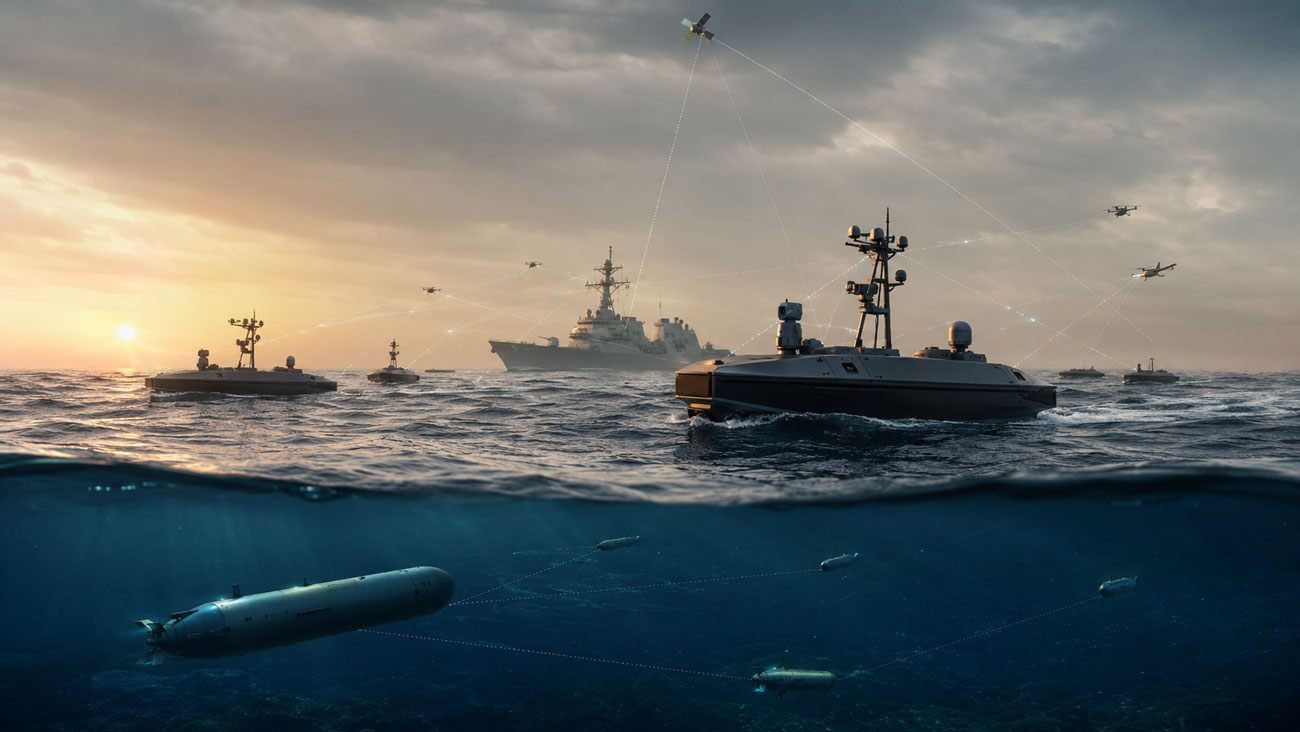
The Navy’s Medium Unmanned Surface Vessel marketplace is testing more than seven competing autonomous vessels. It is testing a new force-development model: mature commercial technology enters quickly, platforms prove themselves at sea, successful designs become eligible for production, and competition can continue as autonomy, payloads, manufacturing, and operational requirements evolve. The real strategic asset may be the marketplace—and the architecture that keeps it open.
Bottom line: the Navy’s Medium Unmanned Surface Vessel marketplace matters because it separates one decision that traditional shipbuilding often combines: which platform is useful today, and which platform should define the fleet for decades?
On May 29, 2026, the Navy selected seven companies to advance into at-sea testing for the Medium Unmanned Surface Vessel (MUSV) Family of Systems. Companies whose vessels successfully complete the demonstrations receive $15 million and become eligible for follow-on production. Testing is scheduled to conclude by October 2026.
The Navy explicitly calls the effort a marketplace.
That word captures the deeper experiment. Instead of selecting one design, freezing requirements around it, and spending years moving toward production, the service is asking multiple companies to bring mature technology to the water, demonstrate performance, and compete for continued relevance.
The vessel is important.
The mechanism for continuously finding a better vessel may be more important.
The Navy Is Changing More Than the Ship
For more than a century, naval capability has been organized around the ship.
A requirement is established. A design is developed. A shipyard builds it. The Navy accepts it. The vessel serves for decades while sensors, weapons, electronics, and software are upgraded around the hull.
That model remains appropriate for highly complex capital ships.
Autonomous vessels create a different possibility.
Commercial maritime hulls already exist. Navigation systems exist. Autonomy software exists. Sensors exist. Commercial shipyards understand workboats, offshore vessels, patrol craft, and other relevant platforms.
The Navy can therefore spend less time predicting which concept should work and more time observing which system actually works at sea.
That is a major acquisition shift.
Seven Companies Are Competing in the First MUSV Marketplace
The Navy selected:
- Sea Machines;
- Leidos;
- Saronic Technologies;
- Galliano Marine Services;
- PacMar Technologies;
- Birdon;
- and Huntington Ingalls Industries.
The service says the marketplace is intended to leverage mature commercial solutions and create opportunities for smaller and nontraditional shipyards.
Successful at-sea demonstrations are the gate to follow-on production.
That structure changes the competitive question from:
Who can win the development program?
to:
Who can continue demonstrating the most useful, supportable, producible capability?
That is a much healthier question for technology expected to evolve quickly.
Build Less Before You Know More
Traditional acquisition attempts to resolve uncertainty before production through detailed requirements, reviews, developmental testing, and configuration control.
That discipline is essential when failure is extremely expensive and the government expects a platform to remain in service for 30 or 40 years.
But autonomous maritime systems allow another model:
use mature technology, test earlier in the real environment, learn faster, and let demonstrated performance shape what gets bought next.
At sea, questions that can remain abstract during development become immediate:
- Does the vessel stay operational?
- How does it handle weather and maritime traffic?
- How reliable is the autonomy?
- How much human supervision does it require?
- How difficult is maintenance?
- Can payloads be integrated?
- Can the vessel communicate under degraded conditions?
- Can industry manufacture more of them?
This is a strong example of a test-learn-scale approach to capability development.
The Navy Is Planning for More Than a Handful of Prototypes
The scale of the requirement changes the problem.
In April 2026, the commander of Surface Development Group One said the Navy expects more than 30 MUSVs in the Indo-Pacific by 2030, along with thousands of smaller unmanned surface vessels.
Four experimental vessels can be managed as prototypes.
Thirty medium vessels begin to resemble a force.
Thousands of smaller systems create an entirely different operational architecture.
At that scale, the hard questions become:
- Who maintains them?
- Where are they based?
- How are they fueled and repaired?
- How are software updates distributed?
- How many operators are required?
- How are degraded systems recovered?
- How does command and control scale?
- How does the fleet absorb the data they generate?
Scaling autonomy is not primarily a hull-count problem.
It is an operating-model and fleet-execution problem.
The Vessel May Become a Modular Host for Capability
A traditional destroyer tightly integrates hull, propulsion, crew, sensors, weapons, communications, and combat systems.
An autonomous vessel can potentially be designed more like a modular technology platform:
- hull and propulsion;
- navigation;
- autonomy;
- communications;
- mission computing;
- sensors;
- payloads;
- and mission software.
Those layers do not all need to evolve at the same speed.
A hull might remain useful for years while its autonomy changes repeatedly. A sensing payload can be replaced. Electronic-warfare equipment can be added. Communications can change. Mission software can evolve without rebuilding the vessel.
That shifts military value away from one finished configuration and toward the vessel’s ability to accept future capability.
Open Architecture Determines Whether the Marketplace Survives
A marketplace works only when customers can switch among suppliers.
If each MUSV eventually depends on proprietary autonomy, payload interfaces, command software, data formats, and communications, seven competing vessels can quickly become seven incompatible ecosystems.
That would convert competition into fragmentation.
The stronger model is heterogeneous at the platform level but interoperable where the mission requires it.
Different hulls can compete. Different autonomy implementations can compete. Different manufacturing approaches can compete.
But common or well-governed interfaces should allow the broader fleet to exchange data, integrate payloads, communicate with command systems, and evolve without rebuilding the architecture every time a new vessel appears.
The design principle is simple:
standardize the interfaces, not necessarily the innovation.
This is where modular systems engineering and open architecture determine whether continuous competition remains practical.
The Navy and Air Force Are Testing the Same Acquisition Idea in Different Domains
The MUSV marketplace has a close parallel in the Air Force’s Collaborative Combat Aircraft program.
The Air Force is preserving competition across multiple airframes while separating mission-autonomy software from the physical aircraft through a government-owned reference architecture.
The Navy’s maritime marketplace is not identical, but the strategic logic is similar:
avoid allowing one early platform decision to permanently define the future ecosystem.
Diamondback’s analysis of how the Air Force is unbundling the fighter examines the same architecture-and-market relationship in air combat.
Continuous Competition Could Replace the Winner-Take-All Program
Traditional platform competitions often end when one company wins.
The winning design then establishes training, sustainment, infrastructure, suppliers, and institutional momentum that can persist for decades.
A marketplace creates the possibility that competition continues after the first production decision.
One company may offer greater endurance. Another may manufacture faster. Another may be better suited to a particular payload. Another may introduce better autonomy two years later.
If the architecture supports multiple platforms, the Navy can manage a portfolio rather than permanently choose one winner.
That is a portfolio and acquisition strategy, not simply a boat competition.
Commercial Shipyards Could Expand the Naval Industrial Base
The marketplace also offers a way to expand maritime production without routing every new hull through the limited infrastructure required for nuclear submarines, destroyers, aircraft carriers, and other highly specialized warships.
The Navy explicitly says the MUSV marketplace creates opportunities for smaller and nontraditional shipyards.
That matters because many autonomous vessels may be producible using commercial maritime skills, equipment, engines, suppliers, and facilities.
A distributed manufacturing ecosystem can create:
- additional capacity;
- geographic resilience;
- more supplier competition;
- faster iteration;
- and lower barriers for nontraditional firms.
This is where industrial-base, workforce, supplier, and capacity planning become part of autonomous-fleet strategy.
Autonomy Changes the Meaning of Naval Mass
A traditional warship dedicates enormous design effort to supporting people.
Berthing, food, water, sanitation, habitability, medical support, life safety, and damage control all exist because sailors live aboard the vessel.
Removing the onboard crew can change cost, size, endurance, and risk tolerance.
An unmanned vessel can potentially operate farther forward, remain on station longer, scout hazardous areas, carry distributed sensors, act as a communications relay, perform electronic warfare, monitor chokepoints, or support targeting without placing sailors aboard.
Individually, one MUSV does not need to match a destroyer.
The question is what dozens of distributed autonomous vessels contribute when connected to the broader fleet.
Mass Without Networking Is Just More Boats
An unmanned vessel collecting useful information but unable to share it has limited operational value.
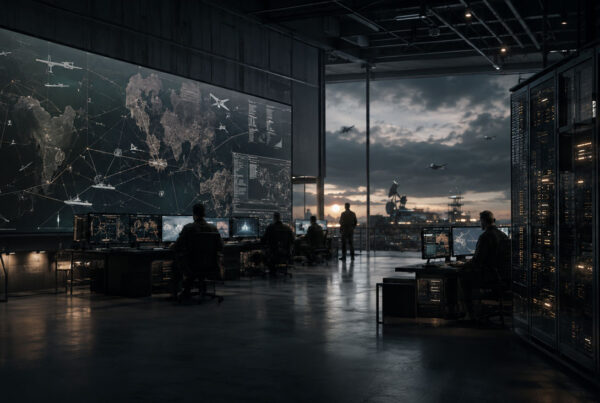
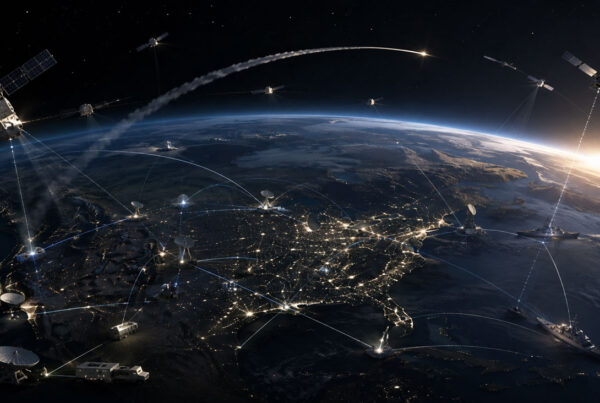
Autonomous platforms have to connect into a broader maritime command-and-sensing architecture involving ships, aircraft, satellites, shore facilities, other unmanned systems, and joint networks.
That makes data and communications architecture central to autonomy.
It also creates vulnerabilities.
Radio-frequency emissions can reveal position. Satellite links can be jammed. Bandwidth can become constrained. Cyberattacks can target mission systems.
The fleet therefore cannot assume that every autonomous vessel will remain continuously connected.
The Most Valuable Autonomy May Appear After the Link Drops
Much of the practical value of maritime autonomy is not about lethal decision-making.
It is about whether a vessel can continue operating safely and usefully without constant human control.
Can it navigate through maritime traffic? Respond to weather? Avoid obstacles? Manage fuel? Hold a patrol area? Recognize loss of communications? Execute a safe fallback behavior? Recover?
A remotely operated vessel requiring a dedicated human to manage every maneuver is unmanned, but it is not necessarily manpower-efficient.
The operational advantage arrives when humans can manage systems by exception rather than continuously steering them.
That makes the relevant metric:
How much useful naval capability can each operator supervise?
This is a natural application for AI-enabled autonomy with human mission control and oversight.
GPS Denial and Communications Loss Have to Be Normal Test Conditions
Autonomous maritime systems will operate in environments where navigation and connectivity can be contested.
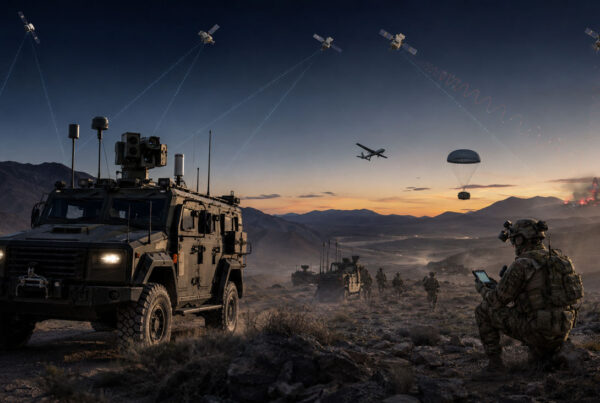
GPS may be jammed or spoofed. Satellite communications may be disrupted. An autonomous vessel may have to function for meaningful periods with only local sensing and previously authorized mission logic.
That requirement connects maritime autonomy to the broader assured-PNT problem described in Diamondback’s analysis of what happens when GPS disappears.
Resilience cannot be added after the autonomous operating model is mature.
It has to be designed into navigation, sensing, communications, fallback behavior, and testing from the beginning.
The Personnel Equation Matters as Much as the Hull
Fleet growth through traditional crewed ships requires proportional growth in sailors, training pipelines, housing, medical support, career management, and replacement personnel.
Autonomous platforms create the possibility of increasing maritime presence without increasing onboard manpower at the same rate.
But that advantage depends on the human-to-machine ratio.
If ten vessels require ten full remote crews, personnel savings shrink quickly.
If one team can supervise multiple systems while autonomy handles routine navigation and mission execution, the economics change.
The workforce therefore shifts rather than simply disappears.
The Navy will need autonomy operators, maintainers, software specialists, mission planners, cyber personnel, data engineers, and technicians capable of sustaining a fleet whose critical systems are increasingly digital.
Logistics Will Determine Whether Autonomous Fleets Scale
Removing sailors from the vessel does not remove maintenance.
Engines fail. Saltwater corrodes components. Sensors degrade. Hulls foul. Communications equipment breaks. Software requires updates.
A scalable autonomous fleet therefore needs a sustainment architecture designed around high numbers of distributed systems.
Commercial-style vessels may create options unavailable to more specialized warships:
- commercial ports;
- partner-nation facilities;
- mobile maintenance teams;
- standardized commercial components;
- modular payload replacement;
- and distributed support hubs.
The design philosophy should increasingly favor:
diagnose quickly → replace quickly → return to mission.
Autonomous Maritime Systems Are Already Moving Into Specific Missions
The larger maritime-autonomy story extends beyond MUSV.
In July 2026, Naval Surface Warfare Center Panama City Division highlighted its MEASUR project, which uses unmanned underwater vehicles, advanced sensors, and artificial intelligence to assess physical damage to subsea objects and threats.
During Sea Breeze 26-2 later that month, U.S., allied, and partner forces employed unmanned underwater and unmanned surface systems as part of mine-countermeasure training.
Those efforts are important because they move the discussion away from abstract autonomy and toward specific operational effects.
Mine warfare, subsea inspection, sensing, reconnaissance, communications relay, and hazardous-area operations all provide missions where machines can absorb risk or persistence requirements that would otherwise fall on people.
Mine Countermeasures Show Why Autonomy Can Change the Risk Equation
Minefields are dangerous by design.
Traditional mine-countermeasure missions can expose ships, divers, helicopters, and specialized crews to significant risk.
Unmanned systems can distribute parts of that mission across machines:
one platform searches, another classifies, another investigates, and human operators supervise from farther away.
That is an important distinction.
Autonomy is not valuable only because it may reduce cost.
In some missions it changes who has to enter the hazard area.
Autonomy Will Change Naval Command and Control
A fleet with dozens or hundreds of unmanned systems cannot be commanded as though every vessel were a crewed ship requiring individual steering instructions.
Commanders will increasingly task groups of systems through mission intent and desired effects.
One unmanned vessel may detect something and cue another platform. A surface system may relay information from an undersea vehicle. Software may adjust patrol geometry. Several systems may divide a search area automatically.
The human moves upward in the command hierarchy.
Instead of controlling motion continuously, the commander manages behaviors, priorities, constraints, and effects.
That makes command software and data architecture core naval combat systems.
Cybersecurity Becomes a Seaworthiness Requirement
Autonomous navigation, perception, propulsion control, communications, mission planning, and payload management depend heavily on software.
A cyber compromise therefore has physical operational consequences.
An attacker may not need to sink an unmanned vessel if it can corrupt navigation, manipulate mission data, prevent software updates, or make the platform untrustworthy.
Secure software supply chains, authenticated commands, sensor integrity, network segmentation, safe recovery modes, and trusted update mechanisms become part of vessel survivability.
The autonomous ship has to be hardened digitally as well as physically.
The Navy Must Avoid Building Exquisite Unmanned Ships
Autonomous programs face the same requirements growth that affects other defense systems.
More sensors. More communications. More survivability. More payloads. More processing. More mission requirements.
Each addition may be reasonable individually.
Collectively, they can turn a relatively affordable autonomous vessel into another scarce, expensive platform commanders become reluctant to risk.
That would undermine the concept.
The marketplace therefore needs disciplined cost and requirement management alongside technical competition.
Attrition Has to Be Reflected in the Industrial Model
Traditional naval programs are designed to sustain individual hulls for decades.
A lower-cost autonomous fleet may require a more renewable model.
Some vessels will be lost. Others will become obsolete. New autonomy, sensors, and manufacturing approaches will emerge.
The industrial system therefore needs to support recurring production and improvement:
- replace losses;
- update designs between production lots;
- qualify new suppliers;
- introduce new payloads;
- and allow better vendors to enter.
The fleet evolves through repeated production rather than waiting decades for a new ship class.
Testing at Sea Should Become Continuous
If autonomous systems evolve continuously, test cannot be a one-time acquisition phase.
New autonomy, payloads, hulls, software, and communications need persistent evaluation under difficult conditions:
- heavy weather;
- long-duration operations;
- dense maritime traffic;
- GPS denial;
- communications loss;
- electronic warfare;
- cyberattack;
- and mechanical failures.
The objective should not merely be proving that a vessel can complete one demonstration.
It should be continually discovering where the operating model breaks and feeding those lessons back into the next iteration.
That is the maritime version of the continuous-delivery cycle explored in Diamondback’s analysis of why the battlefield cannot wait for the next software release.
The Navy Is Becoming a Market Shaper and Systems Integrator
The MUSV marketplace changes government’s role.
Instead of always funding technology from the earliest development stage, the Navy can identify mature commercial capability, expose it to military conditions, determine what survives, and shape subsequent purchases around evidence.
That requires the government to become exceptionally good at:
- understanding commercial technology;
- owning mission architecture;
- defining interfaces;
- testing operationally;
- managing portfolios;
- and buying from nontraditional suppliers.
The Navy’s Portfolio Acquisition Executive for Robotics and Autonomous Systems describes its role as bridging mature commercial autonomy and warfighter requirements while ensuring interoperability across surface, subsurface, and aviation domains.
The government increasingly becomes the integrator of a competitive ecosystem rather than the owner of one monolithic product.
The Maritime Industrial Base Could Become Much Larger
If the marketplace model works, future naval capacity may be produced by an ecosystem extending well beyond traditional prime shipbuilders.
Commercial boat builders, offshore-energy suppliers, autonomy companies, software firms, sensor manufacturers, communications providers, engine suppliers, and advanced manufacturers can all contribute.
That broader industrial base creates more than capacity.
It creates options.
And options matter when the objective is to improve technology faster than one supplier, one shipyard, or one fixed design can evolve.
The Fleet of the Future Will Be Heterogeneous
Autonomous systems are unlikely to replace aircraft carriers, submarines, destroyers, amphibious ships, or other crewed platforms.
The more likely future is a heterogeneous fleet.
Large crewed platforms provide concentrated combat power, command, weapons, sustainment, and complex mission capability.
Autonomous systems extend sensors, patrol larger areas, perform hazardous tasks, distribute payloads, relay communications, create decoys, and operate in environments where sending sailors may be unnecessary or excessively risky.
The relationship between the two matters more than either category alone.
The network becomes the force.
Naval Power May Increasingly Be Measured in Effects, Not Hulls
Traditional fleet debates often focus on ship count.
Autonomous systems make that number less descriptive.
A force containing fewer crewed ships but hundreds or thousands of networked autonomous surface, subsurface, and aerial systems may possess greater sensing coverage, persistence, distributed payload capacity, or operational complexity than hull count suggests.
Future force measurement may therefore need to account for:
- sensor coverage;
- mission persistence;
- distributed payloads;
- weapons capacity;
- autonomous endurance;
- network contribution;
- human-to-machine ratio;
- and replacement rate.
Autonomy may eventually change how naval capacity itself is measured.
The Marketplace Could Become the Capability
The seven-company MUSV competition is still an experiment.
The demonstrations are underway. Some systems will perform better than others. Requirements will change. Operational lessons will accumulate.
But the most important outcome may not be which vessel performs best in 2026.
It may be whether the Navy creates a mechanism through which better vessels can continue winning over time.
A durable marketplace would allow industry to compete, platforms to demonstrate, operators to evaluate, production to follow, lessons to return, and new technology to re-enter the competition.
That is acquisition operating closer to technology speed.
And for autonomy, speed matters because the maritime competition will not be decided by whichever nation fields the best unmanned vessel once.
It will be decided by whichever naval enterprise can field, learn, integrate, replace, and improve autonomous systems continuously.
The future fleet may therefore be defined not only by the ships America builds.
It may be defined by how quickly the Navy can discover and field the next better one.
Primary Sources
- U.S. Navy — Seven companies selected for MUSV Marketplace at-sea demonstrations, May 29, 2026
- Department of the Navy — Portfolio Acquisition Executive for Robotics & Autonomous Systems
- USNI News — Navy autonomous-surface-vessel force goals for the Indo-Pacific
- Naval Sea Systems Command — MEASUR subsea autonomy and AI project, July 8, 2026
- U.S. Navy — Sea Breeze 26-2 unmanned surface and underwater systems in mine-countermeasure operations