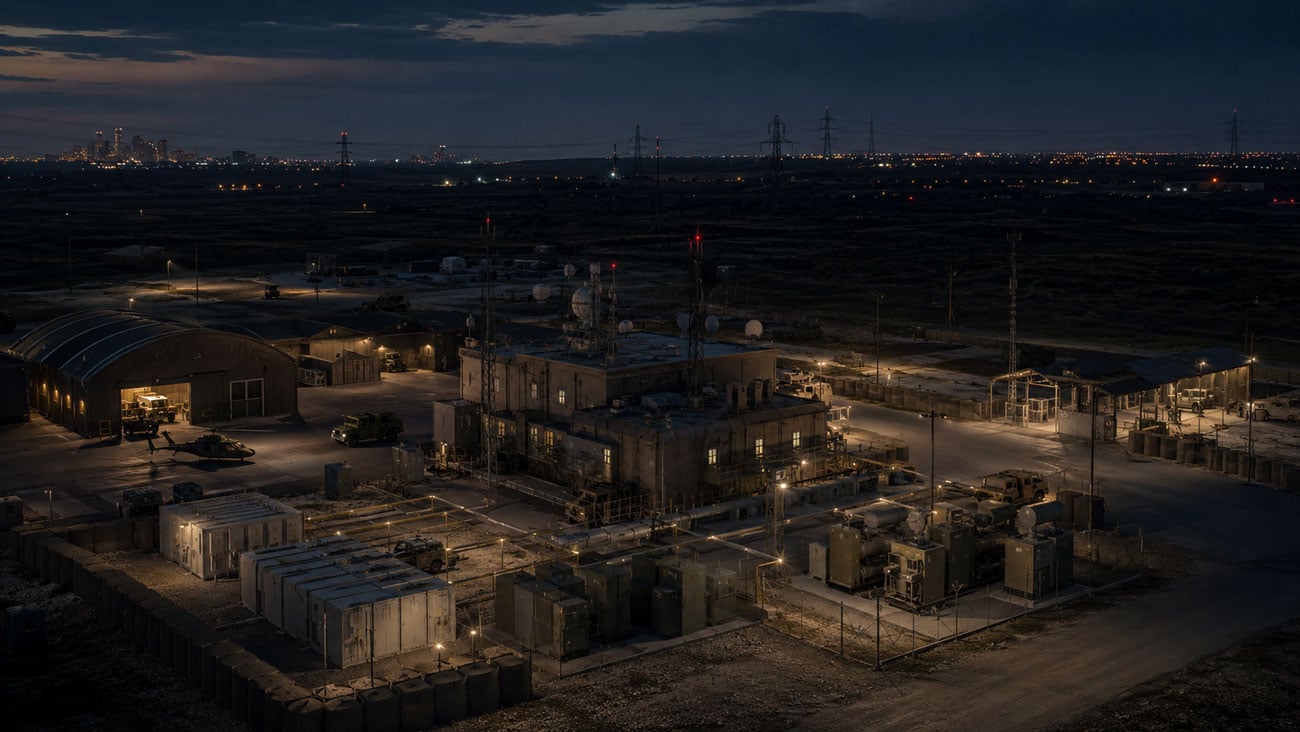
Military installations are operational systems, and nearly every mission they host depends on electricity. In 2026, the Army moved installation energy resilience deeper into the readiness architecture through 14-day islanding requirements, microgrids, long-duration storage, advanced nuclear programs, and private-sector power partnerships. The strategic shift is clear: resilient power is no longer simply a facilities function. It is becoming mission assurance.
Bottom line: a military installation without reliable power is a degraded weapon system.
Command centers, communications, intelligence, maintenance, logistics, airfields, depots, data centers, industrial facilities, access control, fuel systems, medical support, and digital infrastructure all depend on electricity.
That makes energy resilience more than a facilities-management concern.
Power is part of the mission architecture.
The Army’s 2026 resilience initiatives make that shift increasingly explicit. New projects are being designed around independent generation, microgrids, storage, private capital, advanced nuclear energy, and the ability to sustain critical missions through extended commercial-grid disruption.
A Base Without Power Is Not a Base for Long
Military installations are normally described by the forces and capabilities they host.
Aircraft. Command centers. Maintenance facilities. Training ranges. Intelligence organizations. Logistics hubs. Arsenals. Data centers. Communications networks.
Nearly every one depends on a less visible enabling system:
electricity.
Lose power and the degradation begins quickly. Servers move to backup systems. Fuel infrastructure may be affected. Industrial processes stop. Communications degrade. Climate-controlled spaces become harder to maintain. Maintenance slows. Backup generators begin consuming finite fuel.
For decades, most domestic military installations have been able to treat the civilian electrical grid as an exceptionally dependable utility.
That assumption is becoming less sufficient for mission planning.
The Civilian Grid Is a Strategic Dependency
Military installations are deeply integrated with civilian infrastructure.
They use public roads, telecommunications, water, natural gas, logistics networks, and commercial electricity.
That integration is efficient. Building an entirely separate infrastructure ecosystem for every installation would be prohibitively expensive.
But efficiency creates dependency.
If the grid disappears, the installation inherits the outage.
The cause may be ordinary: storms, wildfire, equipment failure, or regional capacity shortages.
Defense planners also have to consider deliberate disruption.
An adversary may not need to strike a base directly to affect the mission. Cyberattack against a utility, physical sabotage, damage to substations, disruption of fuel delivery, or cascading infrastructure failures can degrade the installation while leaving much of its military hardware physically untouched.
The electric grid is therefore part of the broader national-defense attack surface.
The Army Is Designing Around 14 Days of Grid Loss
On June 16, 2026, the Army announced the second tranche of its Strategic Capital Initiative, focused on energy resilience and dominance.
The effort seeks private partners to finance, build, operate, and eventually decommission commercial power-generation projects at seven installations:
- Aberdeen Proving Ground;
- Fort Detrick;
- Fort Drum;
- Letterkenny Army Depot;
- Picatinny Arsenal;
- Tobyhanna Army Depot;
- and West Point.
During normal conditions, the facilities can sell power commercially.
When the external grid is unavailable for more than four hours, the projects must be able to provide continuous islanded power to the host installation for at least 14 days.
That requirement changes the engineering problem.
A short outage can be handled by backup generation.
Fourteen days requires an integrated energy system.
Backup Power and Mission Endurance Are Different Problems
Traditional emergency-power planning often asks whether critical generators start when utility service fails.
Long-duration resilience asks a more difficult question:
Can the installation sustain essential missions for days or weeks while the surrounding grid remains unavailable?
That requires coordination across:
- generation;
- fuel or energy supply;
- storage;
- distribution;
- switchgear;
- control systems;
- cybersecurity;
- maintenance;
- black-start capability;
- load prioritization;
- and trained operators.
The correct metric is not simply generator capacity.
It is mission endurance.
The Microgrid Is Becoming Mission Infrastructure
A microgrid combines generation, storage, electrical distribution, control systems, and prioritized loads into an architecture capable of operating with or without the commercial grid.
During normal conditions, the installation can remain grid-connected.
During disruption, critical portions of the installation can operate independently in island mode.
That concept is moving from experimentation into real infrastructure.
Fort McCoy opened a $1.4 million Main Gate Microgrid with Battery Backup Project in May 2026. Army officials say it can sustain the Main Gate and surrounding mission-essential facilities for a minimum of 14 days during commercial grid loss while also providing approximately $20,000 in expected annual energy savings.
At Fort Bliss, a completed $58 million third-party-financed project includes microgrids and energy storage supporting more than 140 critical buildings and is designed to provide resilient power to roughly 40 percent of critical facilities.
These are continuity-of-operations systems—not simply energy-efficiency upgrades.
Mission Analysis Should Determine Which Loads Survive
Installation resilience is not primarily a question of total electricity consumption.
It is a question of mission priority.
Which systems have to remain online during the first hour?
Which must still operate after 24 hours? Seven days? Fourteen days?
Which loads support command and control? Security? Deployment? Airfield operations? Medical care? Industrial output? Data processing? Fuel distribution?
Some loads can be reduced or shut down temporarily.
Others cannot.
The resilience architecture should therefore begin with the mission and work backward into electrical requirements.
This is fundamentally a mission-prioritization and strategic planning problem.
Energy Resilience Is an Architecture Problem
No individual technology creates resilience by itself.
A battery does not. A generator does not. Solar does not. Natural gas does not. A microreactor does not.
The capability emerges when generation, storage, utility connections, distribution, controls, critical loads, fuel, cybersecurity, and operational procedures work as one system.
That makes installation-energy modernization a systems-engineering and integration challenge.
The same principle appears across defense modernization.
A collection of sensors does not automatically create situational awareness.
A collection of applications does not automatically create a digital enterprise.
A collection of power technologies does not automatically create mission resilience.
Integration creates the capability.
The Army Is Keeping the Generation Solution Technology-Agnostic
The Strategic Capital Initiative does not prescribe one generation technology for all seven installations.
The Army is open to multiple approaches, including solar, natural gas, geothermal, and nuclear, subject to the program’s performance and commercial requirements.
That is strategically sensible.
Installations have different missions, climates, land availability, utility markets, fuel infrastructure, geology, grid conditions, and load profiles.
The better requirement is outcome-based:
provide reliable independent power for the critical mission.
Industry can then compete over the best architecture for achieving it.
Private Capital Is Becoming Part of Mission Infrastructure Acquisition
The Army’s current model is also financially significant.
Under the Strategic Capital Initiative, private developers are responsible for financing, design, construction, operations, and eventual decommissioning. The Army provides non-excess land under long-term leases, typically beginning with a 50-year term.
Commercial revenue supports the business case during normal operations.
The installation receives resilience during disruption.
This model attempts to align private investment with military mission assurance.
It also expands the government’s acquisition toolkit beyond traditional military construction.
Energy Resilience Requires More Than Energy Companies
In July 2026, the Army and Air Force signed 10-year Intergovernmental Support Agreements with Arizona State University that allow installations across the continental United States to access services including:
- energy audits;
- metering;
- utility monitoring;
- data integration;
- resilience planning;
- and workforce development.
The agreements demonstrate that resilient power is not only a hardware problem.
It requires data, engineering, analytics, planning, facilities expertise, utility coordination, and trained people.
Installation resilience increasingly resembles an enterprise-management problem.
An Installation Needs an Energy Operating Picture
Mission assurance depends on knowing the actual energy posture.
How much power is being consumed? Which buildings are drawing it? Which loads are critical? What generation is available? How much storage remains? Which equipment is degrading? How long can the installation sustain current operations?
Answering those questions requires sensors, metering, operational technology, data integration, and software.
The installation increasingly needs an energy operating picture comparable to other readiness information.
That makes data architecture and technology enablement part of energy resilience.
Cybersecurity Is Part of Electrical Reliability
Modern power systems are increasingly digital.
Generation, meters, storage, switchgear, building controls, and distribution equipment may all depend on connected industrial-control systems.
That creates efficiency and visibility.
It also creates attack surface.
A microgrid designed to protect the installation from external grid failure cannot become a new mission vulnerability because its control network is insecure.
Energy cybersecurity therefore includes:
- network segmentation;
- authentication;
- asset visibility;
- secure remote access;
- configuration control;
- patch management;
- logging;
- manual fallback procedures;
- and recovery modes.
The objective is not simply preventing compromise.
It is ensuring that power distribution can continue even when portions of the digital environment are degraded.
Black Start Is the Test of True Independence
A resilient installation has to consider what happens after a complete loss of external electricity.
Can the local system restart itself without depending on the grid?
Controls need power. Pumps may need power. Switchgear has to operate. Communications have to return. Loads need to be reconnected in sequence.
That makes black-start capability a critical resilience function.
The architecture has to define:
- which source starts first;
- which loads are energized first;
- when storage enters;
- how generation is synchronized;
- how load is added;
- and what happens if one source fails during restoration.
The system has to work from zero.
That capability must be engineered and exercised.
Batteries Are Valuable—But They Do Not Eliminate the Endurance Problem
Energy storage can respond almost instantly.
Batteries can bridge outages, stabilize local grids, support peak loads, assist black start, and store energy for later use.
They also contain finite energy.
For long-duration disruption, storage generally has to operate alongside generation.
The Army Engineer Research and Development Center is therefore examining other long-duration options. In May 2026, ERDC announced work with Cache Energy on a thermochemical storage system specifically intended to improve installation resilience during extended power disruptions.
The important metric remains:
How long can the mission continue?
Advanced Nuclear Could Change Installation Endurance
Nuclear microgeneration is emerging as another potential component of the Army’s resilience portfolio.
Project Pele demonstrated the Department’s push toward transportable advanced nuclear power. The Army is now building on those lessons through the Janus Program, intended to deploy commercially owned and operated microreactors for defense installations and critical missions.
The Army has identified nine installations for consideration in the initial Janus effort, while working with the Defense Innovation Unit and Department of Energy to accelerate commercial advanced-reactor deployment.
The attraction is energy density and endurance.
A microreactor could provide continuous power without depending on frequent fuel deliveries or weather-dependent generation.
But advanced nuclear introduces its own requirements: security, regulation, emergency planning, technical expertise, fuel-cycle management, waste, cost, and public acceptance.
There will not be one universal energy technology.
The value is a diversified portfolio matched to mission need.
Energy and Compute Are Converging
Defense missions are becoming more computationally intensive.
Artificial intelligence, cloud infrastructure, data processing, advanced simulation, cyber operations, intelligence, and autonomy all require computing.
Computing requires power.
This is why installation-energy strategy and defense-AI infrastructure strategy are increasingly connected.
Diamondback’s analysis of why the Pentagon’s AI race is becoming a compute race examines the other side of this dependency.
The AI race is partly a compute race.
The compute race is partly an energy race.
A military organization seeking substantially greater digital capacity eventually has to answer a physical question:
Where does the electricity come from?
The Organic Industrial Base Depends on Resilient Power Too
Installation energy resilience is not limited to headquarters or airfields.
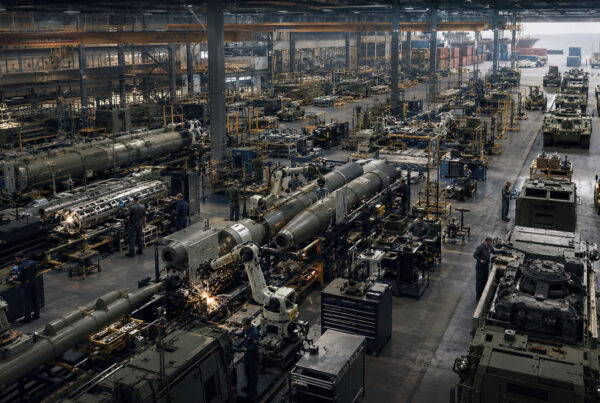
Depots, arsenals, and ammunition plants operate heavy industrial equipment, machining centers, foundries, environmental systems, heat treatment, material handling, testing infrastructure, and other energy-intensive processes.
A prolonged outage at one of those facilities can affect the broader defense production network.
The Army’s Energy Resilience and Conservation Investment Program, or ERCIP, had 18 projects in various stages of planning and development in FY2026. The portfolio includes projects at locations such as Rock Island Arsenal and overseas installations.
Huntsville Center describes ERCIP as a program intended to ensure reliable energy and water for mission-critical operations.
At Rock Island Arsenal, current plans integrate utility upgrades, solar, natural gas generation, hydroelectric capability, and island-mode operation.
A factory cannot contribute to wartime surge capacity if the electrical infrastructure supporting it is fragile.
Energy Resilience and Industrial Resilience Are Becoming the Same Problem
The relationship between power and production is increasingly visible across the broader defense industrial base.
Factories need reliable electricity. Machine tools, automated inspection, robotics, chemical processing, data centers, environmental controls, and test equipment all depend on it.
As NATO and the United States invest in expanded defense-production capacity, the energy architecture supporting those plants becomes part of the industrial-mobilization problem.
Diamondback’s analysis of why NATO now needs factories as much as funding addresses that production challenge at Alliance scale.
Water and Power Cannot Be Planned Independently
Electrical resilience intersects with water.
Pumps need electricity. Treatment systems need electricity. Distribution controls need electricity. Many industrial operations depend on both water and power. Some generation and cooling systems also depend on water availability.
Power disruption can become water disruption.
Water disruption can constrain power and industrial operations.
That is why ERCIP addresses both energy and water resilience.
Mission assurance requires understanding the dependencies between infrastructure systems rather than planning each utility separately.
Fuel Logistics Remain a Hidden Constraint
Backup generators depend on another system: fuel.
How much is stored onsite? How quickly is it consumed? How will more arrive during regional disruption? Are roads available? Are civilian fuel supplies constrained? Is transportation capacity supporting other missions?
A generator may be reliable while its fuel supply chain is fragile.
That makes onsite generation with longer endurance attractive for some installations.
The resilience principle is the same as in contested logistics:
a capability dependent on uninterrupted resupply is only as resilient as the supply chain behind it.
Installations Need to Exercise Power Failure
Resilience cannot be validated only through engineering documents.
Installations need exercises that introduce realistic friction.
Lose commercial power. Disable a generator. Restrict storage. Interrupt communications. Introduce a cyber event into the energy-control environment. Force operators to restore loads manually.
Then observe what fails.
Which critical facility was connected incorrectly? Which generator did not start? Which building consumed more power than expected? Which control system required an external network? Which recovery procedure existed only on paper?
Those exercises expose dependencies diagrams can miss.
This is where readiness testing and operational execution turn resilience architecture into a demonstrated capability.
The Goal Is Selective Independence, Not Permanent Isolation
Military installations do not need to disconnect permanently from commercial utilities.
The commercial grid is efficient, sophisticated, and usually reliable.
The better model is selective independence.
Use the commercial grid during normal conditions. Participate in energy markets where useful. Benefit from regional infrastructure.
Then separate when required.
Continue critical missions.
Reconnect when conditions normalize.
The strategic value lies in preserving options.
Resilience Can Create Peacetime Economic Value
Many technologies that improve wartime resilience can also reduce ordinary operating costs.
Fort McCoy’s microgrid is expected to save money through battery-supported peak management. Fort Bliss’s broader UESC project is projected to save more than $136 million over its 24-year contract while improving energy and water resilience.
That creates an unusual alignment.
The same infrastructure can improve mission continuity and generate economic value during normal operations.
That alignment helps make private-capital and third-party-financed models practical.
Contractors Need to Understand the Mission Behind the Meter
Installation energy resilience creates opportunities beyond conventional electrical construction.
Government increasingly needs partners capable of understanding:
- critical mission loads;
- generation;
- microgrids;
- storage;
- industrial control systems;
- cybersecurity;
- data integration;
- utilities;
- capital structures;
- construction;
- operations;
- maintenance;
- and continuity planning.
The key requirement is mission context.
A commercial campus may optimize primarily for cost.
A military installation has to answer another question:
Will the power architecture keep the mission functioning when normal assumptions fail?
That requires mission support, infrastructure coordination, and continuity planning around the engineering solution.
Every Critical Dependency Should Have a Failure Question
Energy resilience points toward a broader defense-design discipline.
For every critical dependency, ask:
What happens when it disappears?
Power. Network connectivity. Cloud access. GPS. Water. Fuel. A supplier. A data center. A communications link.
Most systems are designed around normal operation.
Resilient systems are designed around how the mission continues when normal operation is no longer possible.
An Installation Is a Weapon System Too
A major military installation is not simply real estate.
It generates forces. Repairs equipment. Processes intelligence. Stores weapons. Maintains aircraft. Operates networks. Trains personnel. Moves logistics. Supports command and control. Produces and sustains materiel.
That means the infrastructure behind the installation contributes directly to combat power.
The runway matters.
The communications architecture matters.
The water system matters.
The electrical architecture matters.
A command center without power is a building.
An industrial facility without power is idle capacity.
A data center without power is unavailable compute.
Power Is Becoming Mission Assurance
The Army’s 2026 push toward independent generation, 14-day islanding, microgrids, storage, advanced nuclear, data-driven energy management, and public-private partnerships reflects a clear change in how installation power is being treated.
Energy is moving from commodity management toward mission assurance.
The future threat environment does not guarantee that infrastructure behind the battlefield remains untouched. Cyber operations can reach domestic utilities. Long-range threats can place fixed infrastructure at risk. Natural disasters can overlap with military crises. Civilian grids can be stressed precisely when installations need to generate forces at maximum tempo.
The correct planning assumption is not that the grid will fail.
It is that the grid may fail when mission demand is highest.
The installations best prepared for that moment will not necessarily be those with the most backup generators.
They will be the ones that understand critical loads, generation, storage, fuel, controls, cyber risk, water, data, workforce, and recovery procedures as one integrated mission architecture.
Military readiness has always depended on energy. What is changing is that power itself is increasingly being designed, managed, and tested as part of the mission.
Primary Sources
- U.S. Army — Strategic Capital Initiative Tranche II and 14-day islanded-power requirement
- U.S. Army — Fort McCoy Main Gate Microgrid
- U.S. Army Engineering and Support Center — Fort Bliss microgrid, storage, and resilience project
- U.S. Army — Army, Air Force, and Arizona State University energy-resilience agreements
- Army ERDC — Long-duration thermochemical energy storage
- U.S. Army Engineering and Support Center — FY2026 ERCIP projects and Rock Island Arsenal resilience
- U.S. Army — Janus Program installation microreactor site-selection effort
- U.S. Department of Defense — Project Pele transportable microreactor