Industry News6

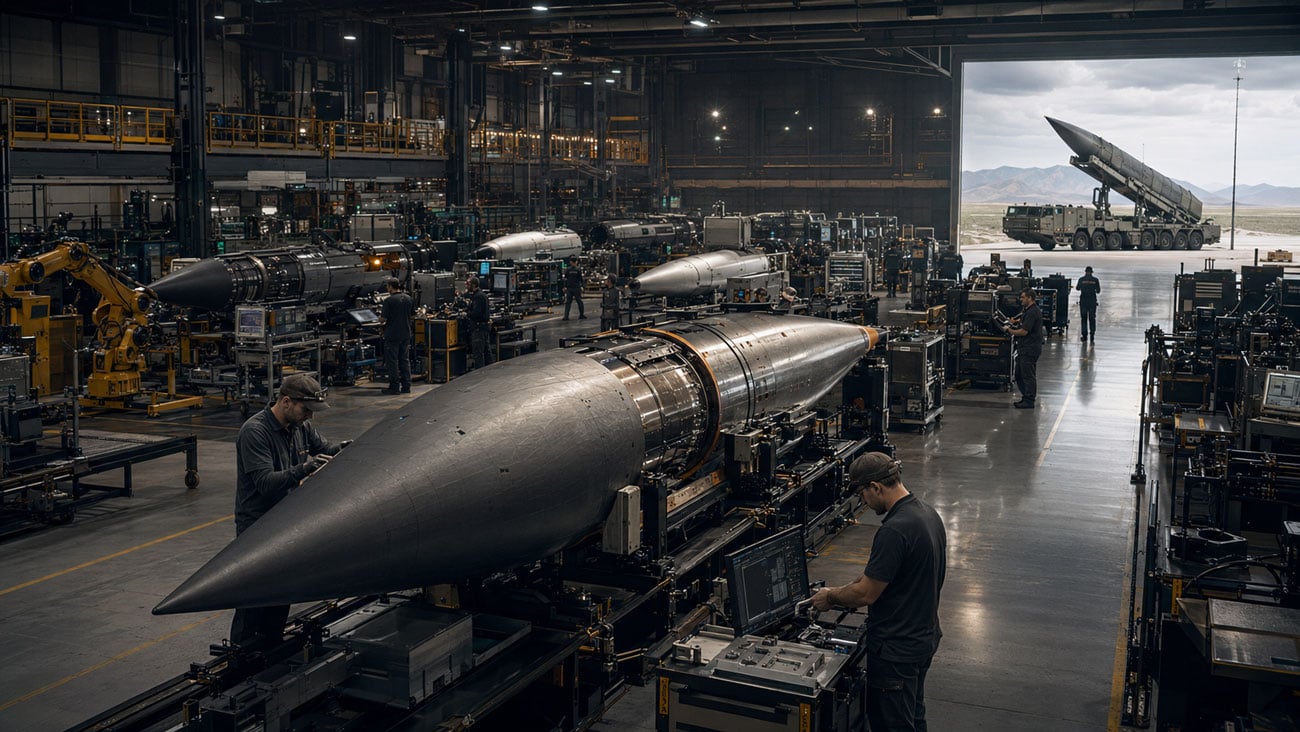
Hypersonic weapons production facility with technicians assembling advanced missile systems and a mobile launcher in the background
Hypersonics Have Left the Lab. Now Comes the Hard Part. Industry News
August 13, 2026

Hypersonics Have Left the Lab. Now Comes the Hard Part.

Hypersonic weapons are crossing from demonstration into operational use, but the harder problem is now industrial. The Army is training with Dark Eagle, the Army and Navy have continued testing a common missile, and billions of dollars are committed to the capability. Yet GAO says production remains well below a goal of only 12 rounds per year. The next hypersonic…
NATO allied forces, armored vehicles, aircraft, and defense infrastructure representing European rearmament and transatlantic military readiness
NATO Has the Money. Now It Needs the Factories. Industry News
August 13, 2026

NATO Has the Money. Now It Needs the Factories.

NATO has largely moved beyond the question of whether Allies will spend more. European Allies and Canada increased core defense spending by nearly 20 percent in 2025, the Alliance is implementing a 5 percent investment framework, and more than $50 billion in new procurements were announced at the 2026 Ankara Summit. The harder problem is conversion: turning money into contracts,…
Engineers working inside an advanced aerospace manufacturing hangar with precision components, raw materials, robotic equipment, and missile and satellite systems
The Next Defense Supply-Chain Crisis Starts Before the Factory Industry News
August 13, 2026

The Next Defense Supply-Chain Crisis Starts Before the Factory

America’s most advanced weapons depend on materials and processing steps that sit far upstream from final assembly. In 2026, Washington accelerated investments in rare-earth separation, refining, strategic stockpiles, recycling, and deeper supply-chain mapping while directing defense contractors to trace critical dependencies back toward raw-material origin. The lesson is increasingly clear: defense production begins long before the factory—and resilience depends on…
Counter-drone defense system detecting and engaging low-cost unmanned aircraft with radar, electronic sensors, and layered interceptors
The Pentagon Is Building a Space Network Designed to Lose Satellites Industry News
August 13, 2026

The Pentagon Is Building a Space Network Designed to Lose Satellites

The Space Force is redesigning military satellite communications around a different assumption: some satellites, ground stations, links, and commercial providers will be disrupted in a major conflict. Its emerging Space Data Network combines proliferated constellations, commercial services, protected military SATCOM, hybrid terminals, and software-driven orchestration so the mission can route around damage. The strategic shift is larger than satellite design—resilience…
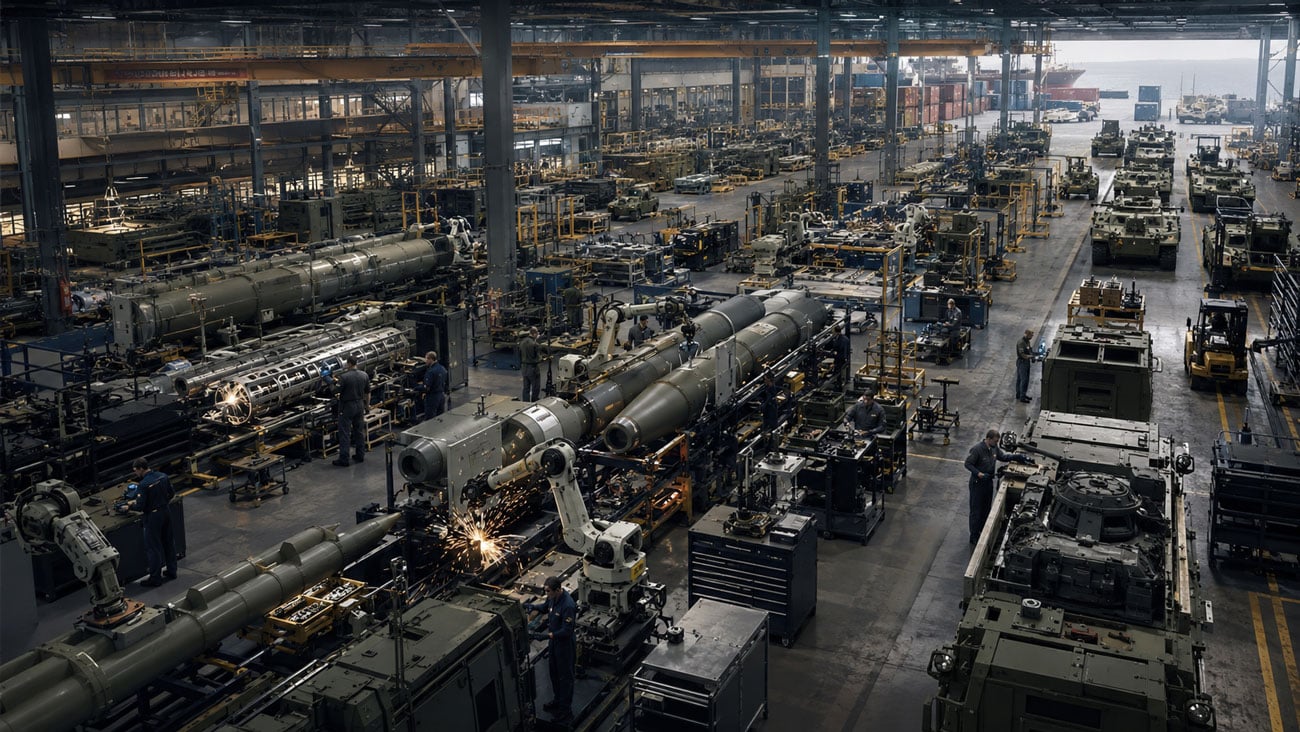
Technicians assembling a U.S. Navy submarine inside a large shipbuilding facility with cranes, scaffolding, and advanced manufacturing equipment
America’s Submarine Gap Is Not Just a Shipyard Problem Industry News
August 13, 2026

America’s Submarine Gap Is Not Just a Shipyard Problem

America’s submarine shortfall is not simply a problem at Electric Boat or Newport News. The Navy must reach one Columbia-class and two Virginia-class submarines per year while sustaining the existing fleet and supporting AUKUS, but current Virginia production remains well below the required rate. Closing that gap depends on a national industrial system of suppliers, skilled workers, outsourced fabrication, advanced…
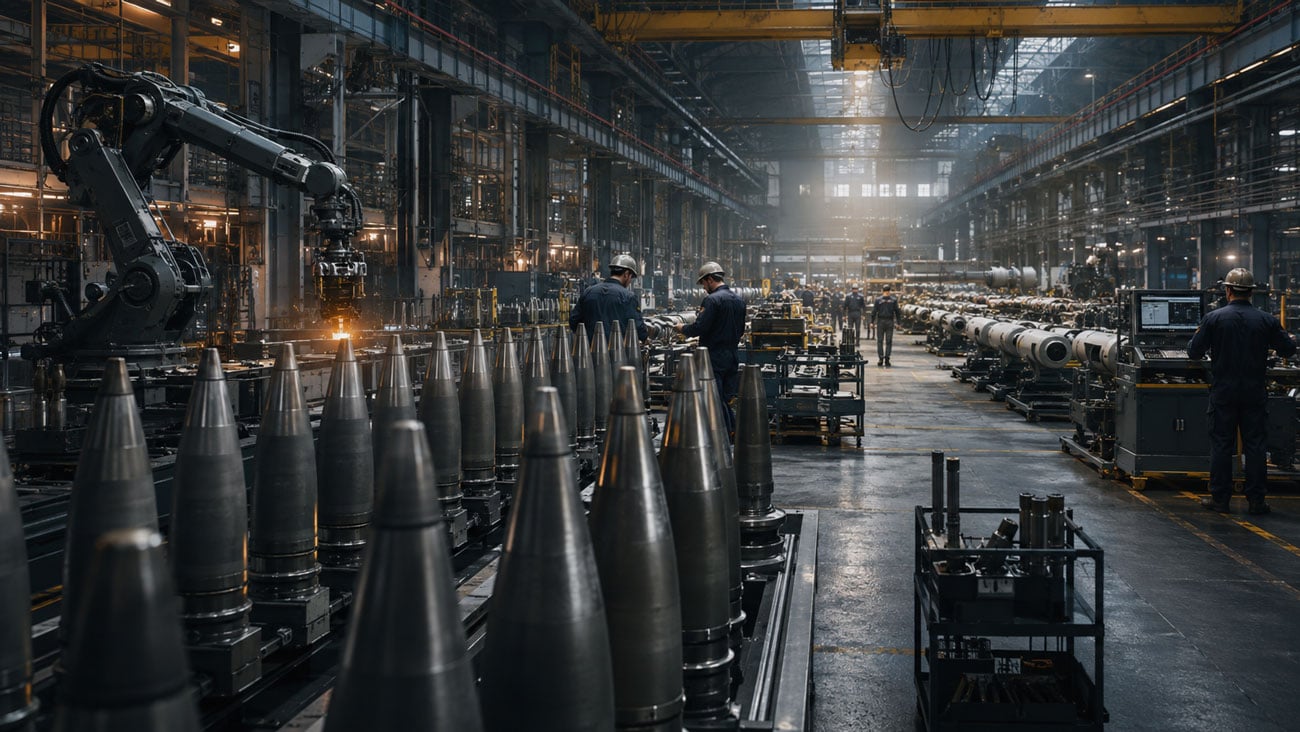
Industrial assembly line producing precision steel components with automated machinery, robotic systems, and manufacturing personnel
America Is Rebuilding the Arsenal. The Bottleneck Is Throughput. Industry News
August 13, 2026

America Is Rebuilding the Arsenal. The Bottleneck Is Throughput.

The United States is investing heavily in ammunition plants, energetics, missile components, and industrial modernization. But a July 2026 Pentagon watchdog review found finished 155mm artillery output at roughly 36,000 rounds per month—well below the Army’s 100,000-round target—and highlighted how one failed metal-parts expansion could constrain the entire production chain. The lesson is larger than artillery: deterrence depends on throughput,…